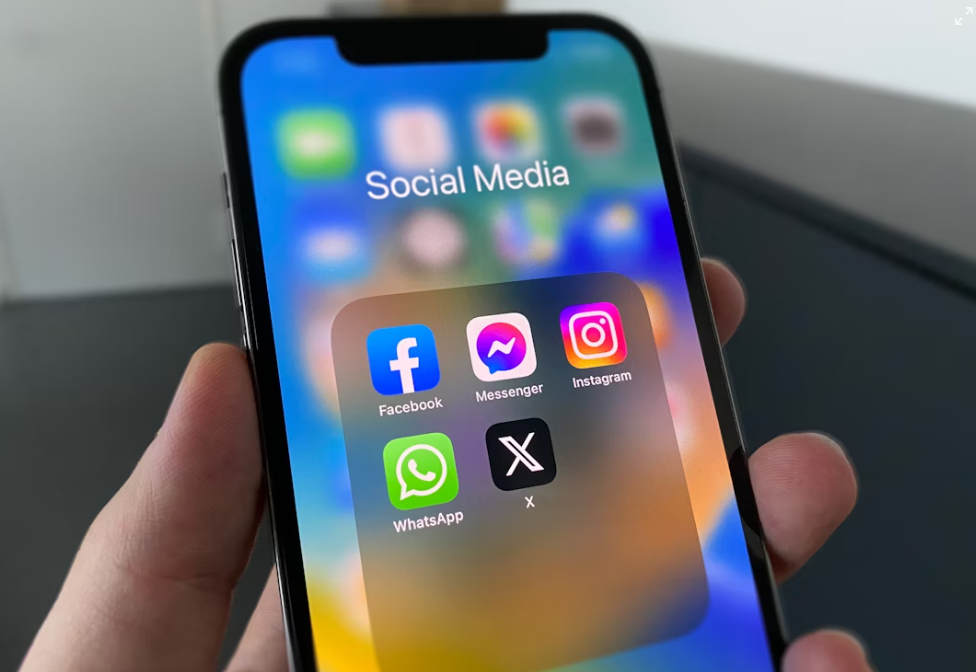
The rise of emerging social media platforms in 2025 is reshaping how people connect online. While Meta and X still dominate, their grip is loosening. Users are exploring alternatives that promise more control, better privacy, and unique communities.
To understand where the next wave of social networking may land, let’s look at the challengers making headlines this year.
Rising Stars of 2025
Several new social media apps in 2025 have gained traction by positioning themselves as fresher, more authentic spaces. Threads, Meta’s own attempt to capture casual conversations, quickly amassed millions of users. Bluesky, once niche, is now one of the most talked-about rising social apps, fueled by its decentralized model.
Even platforms like Reddit and Discord, long-established, are being reimagined as niche community-driven platforms that attract younger generations seeking focus and depth rather than endless scrolling.
Social Media Challengers to Meta and X
The strongest social media challengers to Meta and X aren’t necessarily trying to replace them outright. Instead, they target what users feel is missing. For X, that’s stability and trust. For Meta, it’s authenticity and relevance.
Telegram continues to thrive as a messaging-first network that doubles as a broadcast channel. Mastodon, one of the most recognizable decentralized social media platforms, gives users control by allowing them to join servers that match their values. These models appeal to people burned out by algorithm-driven feeds.
For context on how tech is rewriting cultural habits, see How Technology Is Rewriting Cultural Traditions.
Alternative Social Networks on the Rise
Beyond mainstream names, alternative social networks are gaining ground by focusing on privacy and ethics. Platforms like Pixelfed (an open-source Instagram rival) and Sup (a privacy-first messaging app) highlight the pull of privacy-focused social platforms.
They may not rival Meta’s billions of users yet, but they speak to a growing appetite for digital spaces that respect boundaries. As Forbes notes, open-source apps could transform the future of social networking by balancing community with accountability.
Challenges for New Social Media
Still, it isn’t all smooth growth. The challenges for new social media platforms are steep. Scaling moderation is costly. Without advertising giants behind them, monetization is tricky. And the “network effect” remains powerful because people stay where their friends are.
For example, Bluesky has doubled its users but faces growing pains like bots and impersonation. Mastodon offers freedom, but confuses newcomers with its server system. Until these hurdles are solved, Meta and X remain safe at the top.
To see parallels in attention and habit design, read The Psychology of Notifications: Why You Can’t Stop Checking Your Phone.
Looking Ahead
The future of social networking isn’t about one giant replacing another. It’s about fragmentation. People are spreading across platforms that reflect their needs—casual chats on Threads, niche interests on Discord, or decentralized feeds on Mastodon.
The shakeup doesn’t mean Meta and X disappear. It means they no longer control the conversation alone. For users, that could mean more choice, better privacy, and healthier online spaces.
The Bottom Line
So, what does this wave of emerging social media platforms in 2025 mean? They may not dethrone Meta or X tomorrow, but they’re changing the rules of competition. The real winners are users, who now have the power to choose networks that align with their values.
If 2024 was about discontent, 2025 looks like the year of experimentation. And in that experimentation, the next era of online community is being built.